Wrong-size garments are the top driver of uniform exchanges, and every return carries real cost. Districts using AI body-scanning and virtual-fit tools have reported cutting exchanges by around 12%, while improving fit satisfaction and lowering return logistics.
Why sizing fails at scale
Children grow unpredictably, body shapes vary, and static size charts drift from reality. The result is that a large share of uniform purchases are the wrong fit — each one triggering an exchange, a restock cycle, and a frustrated family.
How AI body scanning improves fit
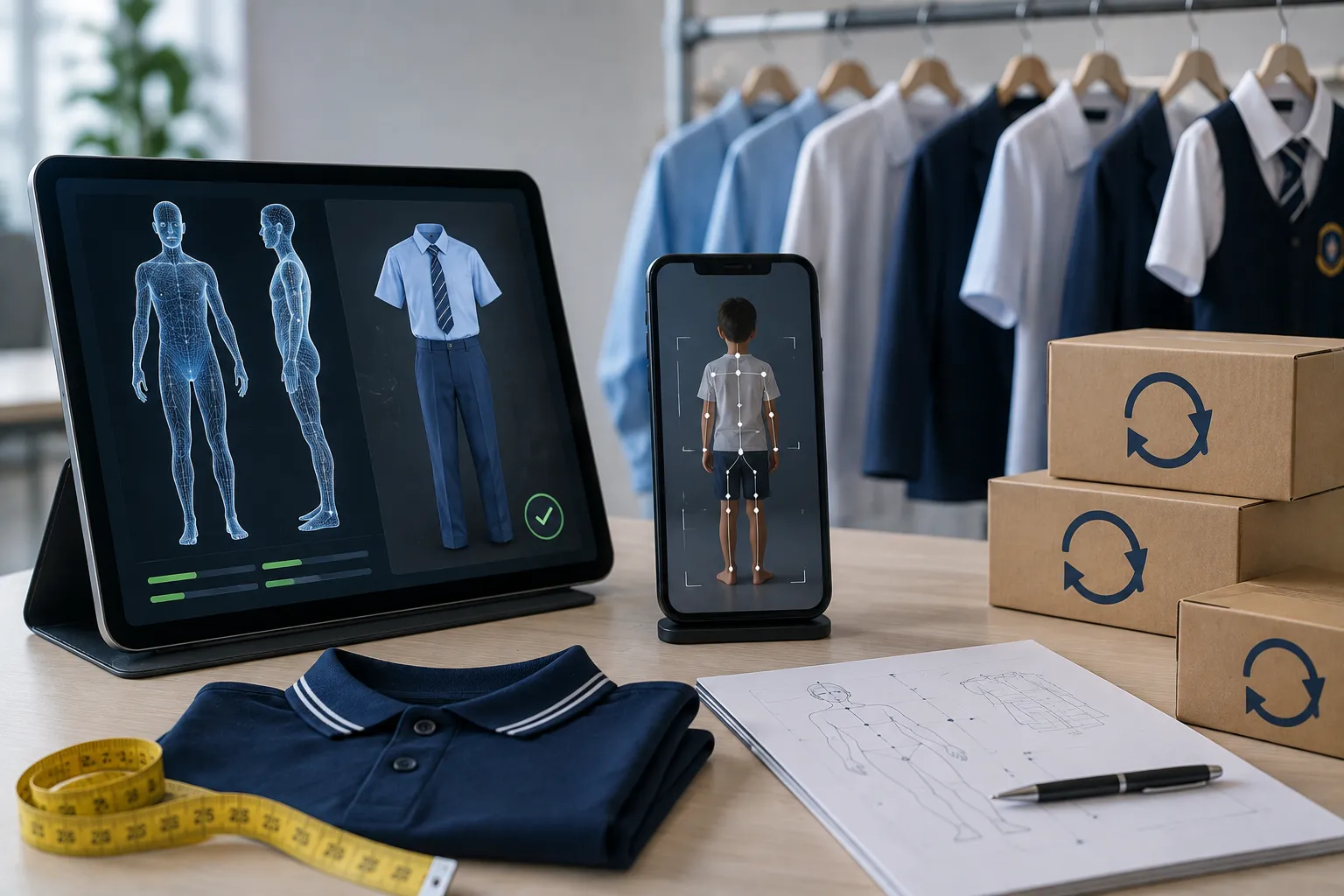
AI body-scanning tools estimate measurements from a few photographs, and virtual-fit engines map those measurements against garment specifications before an order is placed. Schools using these tools have reported roughly a 12% reduction in garment exchanges, alongside higher fit satisfaction.
"The best return-rate strategy is to get the size right before the order ships, not to process the exchange afterward."
The exchange math
Every avoided exchange saves shipping, handling, restocking, and season-end clearance costs. Across a large program, a double-digit drop in returns can fund the technology that created it many times over.
How DELRIQUE helps
DELRIQUE Apparel pairs standardized, data-driven sizing with durable, color-consistent garments, giving institutions a stable baseline that digital fitting tools can build on.
Explore DELRIQUE ApparelFrequently asked questions
Does AI sizing require special equipment?
Most modern tools work from standard smartphone photographs, so there is no need for specialized scanning hardware.
How accurate is virtual fitting?
Virtual-fit engines are accurate enough to materially reduce returns when paired with reliable garment measurements — the reported exchange reductions range from roughly 10% to 15%.
Does better sizing also help the environment?
Yes. Fewer exchanges mean fewer shipments, less packaging, and less waste — a direct environmental benefit that supports sustainable program goals.