The 2024 XZ Utils backdoor attempt, the continued exploitation of open-source package registries, and new regulations mandating Software Bills of Materials are converging into a single message: the software supply chain is the new front line. AI-augmented code review — scanning pull requests, dependencies, and build pipelines in real time — is becoming the standard defense.
Why supply chain attacks are the threat of the decade
Modern software is assembled, not written from scratch. A typical enterprise application pulls in hundreds of transitive dependencies — each one a potential entry point. The 2024 XZ Utils incident, where a two-year social engineering effort nearly compromised SSH across the Linux ecosystem, demonstrated that nation-state actors and sophisticated groups are investing heavily in supply chain compromise.
The SBOM mandate and what it means for your team
A Software Bill of Materials lists every component, library, and version in your application — like an ingredient label for software. The U.S. Executive Order on cybersecurity and comparable EU directives are requiring SBOMs for government-purchased software, and enterprise procurement is following. This is not a trend; it is the new baseline.
"Knowing what is in your software is no longer optional — it is the first page of every due diligence checklist and the first question auditors now ask."
How AI-augmented code review changes the game
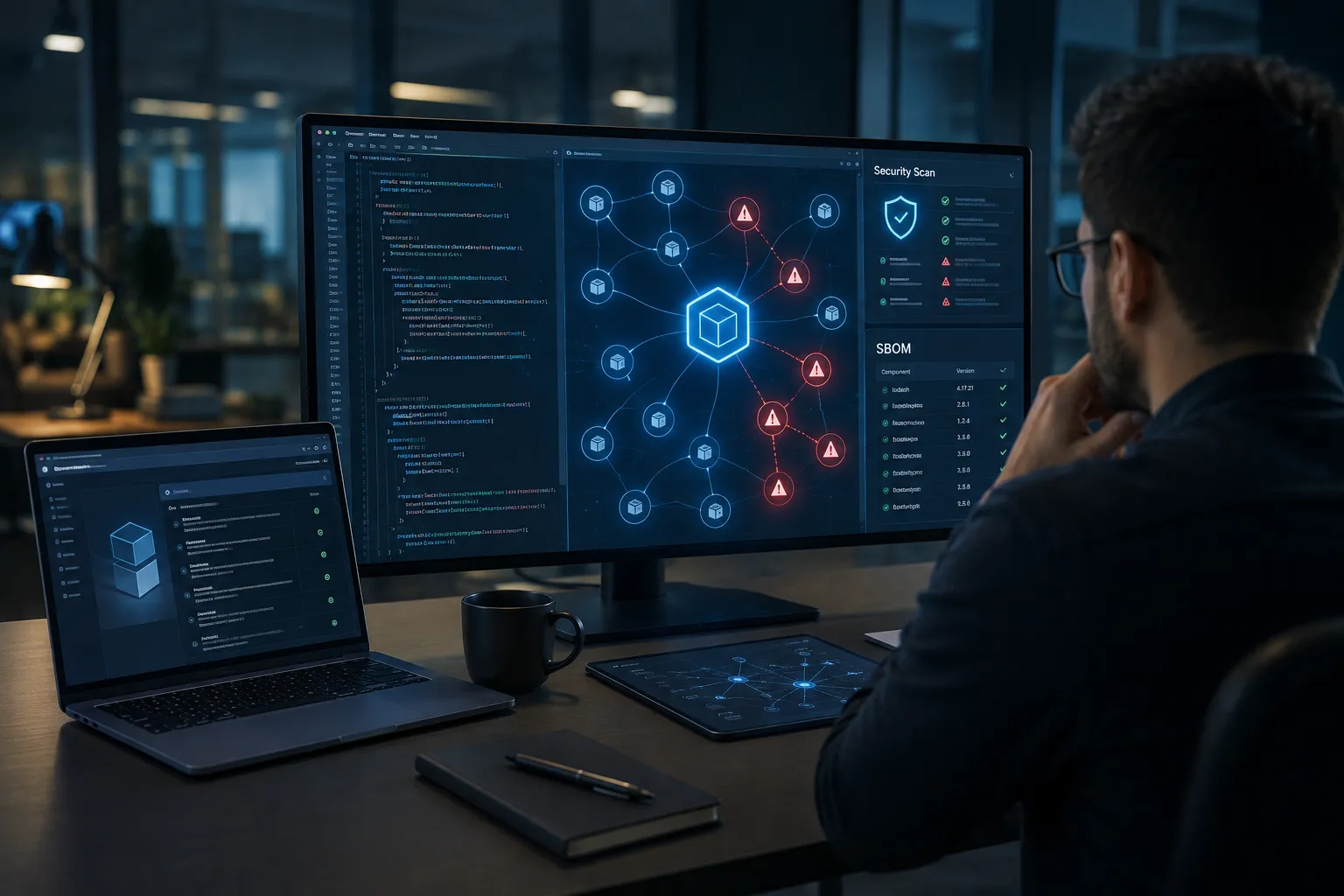
Traditional code review catches logic errors, but misses subtle dependency risks, outdated patterns, and transitive vulnerabilities buried three layers deep. AI-augmented review tools cross-reference pull requests against vulnerability databases, flag suspicious dependency changes, and enforce SBOM completeness — all in the pull request window before anything reaches production.
Continuous validation of your software factory
An SBOM generated once is stale within a day. Continuous SBOM validation — automated scans of every build against vulnerability databases and license-compliance policies — turns a one-time compliance exercise into a live defense mechanism.
How DELRIQUE helps
DELRIQUE Infotech helps mid-market and enterprise teams secure their software supply chains: AI-augmented code review, automated dependency and vulnerability scanning, SBOM generation, and pipeline security governance — without enterprise complexity.
Explore DELRIQUE InfotechFrequently asked questions
What is an SBOM and why does my team need one?
A Software Bill of Materials lists every third-party component in your application. It is required for government contracts, expected by enterprise procurement, and essential for vulnerability management.
Does AI code review replace human reviewers?
No. AI review automates attack surface detection, dependency analysis, and patterns that are too tedious for humans — freeing reviewers to focus on logic, design, and intent.
How often should we regenerate our SBOM?
Ideally, on every build. Integrating SBOM generation into your CI/CD pipeline ensures the inventory stays current without additional effort.
Does our team need a dedicated security engineer for this?
Managed services can deliver continuous SBOM validation and AI-assisted scanning without a full-time security engineer — though a security-minded team lead is always an asset.